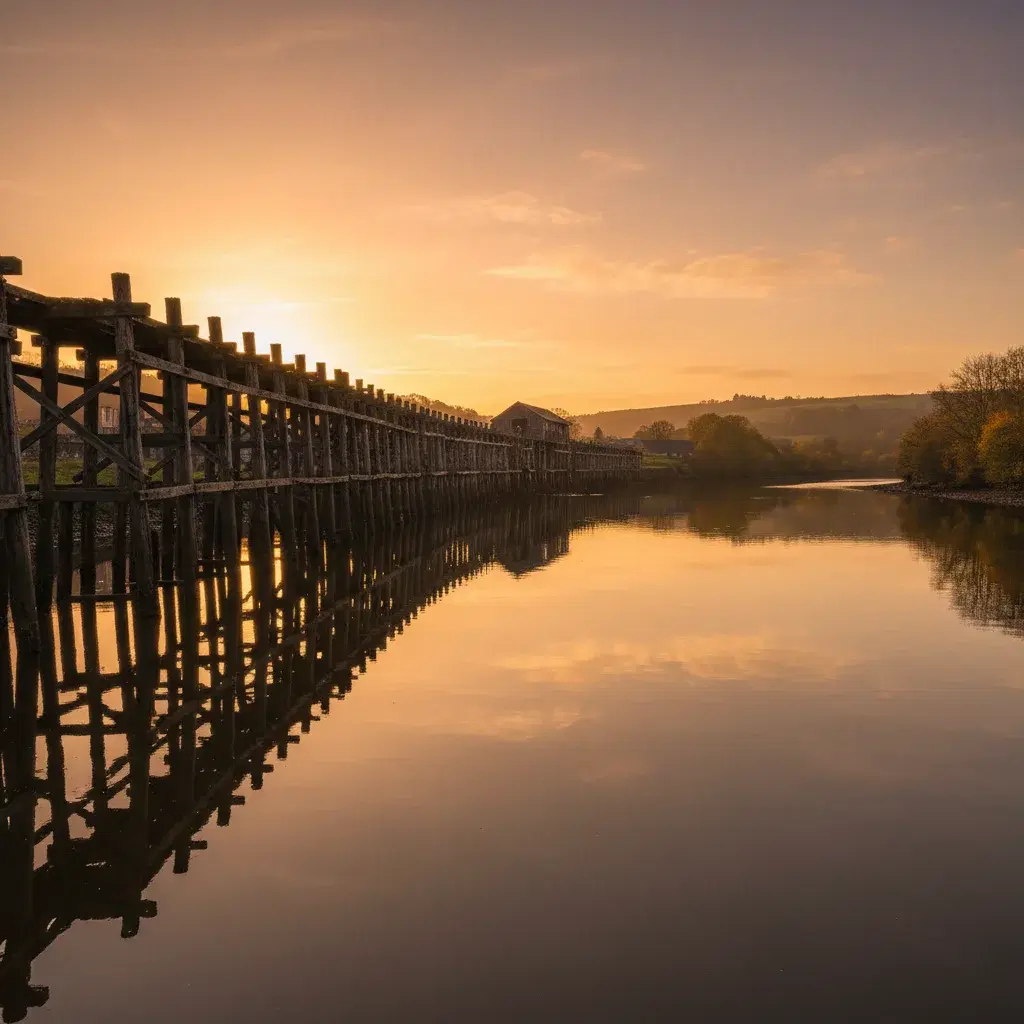
The Staithes and Coal Heritage of Blyth
Coal staithes, the Blyth and Tyne Railway, six collieries, and the pit villages that grew around them -- the coal heritage of Blyth, Northumberland.
For the best part of two centuries, coal defined Blyth. It shaped the harbour, built the town, and employed thousands of families across a cluster of pit villages that gradually merged into the place we know today. The coal staithes -- massive timber structures that towered over the river -- became the most recognisable feature of the waterfront. The Blyth and Tyne Railway connected the collieries to the port. And when the pits closed, the town had to find a way to remember what it had been while becoming something new.
The Staithes
A coal staith was an elevated loading structure built out over the water at a harbour. Coal arrived by rail or waggonway, the wagons were pushed along the staith to a position above a waiting ship, and the coal dropped straight into the hold below. It was brutal, efficient, and it allowed Blyth to load ships faster than almost any other port on the coast.
The first staith at Blyth was built in 1788, designed so that coal wagons from Plessey Pit could drop their loads into waiting colliers. Over the following century, the harbour grew to accommodate several sets of staithes along the river, each one larger and more sophisticated than the last.
The West Staithes, constructed for the North Eastern Railway Company from around 1910, were the last of the traditional staithes to be built on the River Blyth. The First World War interrupted construction, and they were not completed until 1923. These staithes are now a Grade II listed structure, recognised by Historic England for their significance as surviving examples of early twentieth-century coal loading infrastructure.
Best for: The West Staithes, begun around 1910 and completed in 1923, are Grade II listed -- one of the last surviving traditional coal staithes on the river.
At the peak of the coal trade, the staithes operated continuously. Ships queued in the river waiting their turn. The thunder of coal cascading from wagons into holds was the constant soundtrack of the waterfront. By the early 1960s, Blyth was shipping over six million tons of coal a year -- making it, by some accounts, the busiest coal exporting port in Europe.
The Spirit of the Staithes, a sixteen-metre stainless steel sculpture by Simon Packard, now stands on the quayside. From one precise viewpoint on Wellington Street East, its seven polished blocks align to form a life-size silhouette of a steam train -- set at the height where the old staithes once stood.
The Blyth and Tyne Railway
Before the railway, coal reached the harbour by horse-drawn waggonway -- slow, limited in capacity, and at the mercy of the weather. The need for a better connection between the coalfield and the port drove the creation of what became the Blyth and Tyne Railway.
The line began life as the Seghill Railway in 1840, built to carry coal from Seghill Colliery. The owners of Seghill had previously used the Cramlington waggonway, but found their traffic obstructed by the Cramlington Coal Company, which favoured its own loads. An independent line was the solution.
By 1847, the railway had extended to Blyth, and passenger services began on 3 May that year across the four-and-a-half miles between Seghill and the port. In 1852, the company obtained its Act of Parliament and became the Blyth and Tyne Railway. The line was extended to connect with the Tyne at Percy Main, linking the coalfield, the port, and the river in a single network.
The first rail-linked staith on the south side of the river opened in 1849, and coal shipments grew rapidly to around 200,000 tons per annum within a few years. The railway didn't just move coal -- it moved people, goods, and ideas, connecting the pit villages to the wider world.
Best for: The Blyth and Tyne Railway opened for passengers on 3 May 1847. It connected the coalfield to the port and transformed the town's economy.
The Pit Villages
The modern town of Blyth is an amalgamation of settlements that grew around the mines and the harbour. The ancient townships of Cowpen and South Blyth formed the core, but as collieries opened and the population swelled, new communities sprang up.
Cowpen Township, part of the old Horton Parish, was gradually absorbed into Blyth as industrial activity spread from the harbour. Development of the Cowpen Quay and Waterloo areas began around 1810 and 1815 respectively, with major housebuilding through the second half of the nineteenth century to accommodate the growing workforce.
Newsham, to the south, developed its own identity around the New Delaval collieries, which had extended their waggonway to a new sinking in the Newsham ward by 1859. By 1900 the New Delaval pits were producing well, but their fortunes did not last -- they were made idle in 1930 and finally closed by 1955.
At its industrial peak, Blyth had six working collieries within its boundaries: Cowpen, Newsham, New Delaval, Isabella, Mill Pit, and Bates. Each had its own community of terraced houses, its own social clubs, and its own identity. The pit defined the village, and the village defined its people.
The Closures
The decline came in waves. North Seaton Colliery closed in 1961. Bebside's Horton Grange followed in 1962. The Isabella Pit shut in 1966, Mill Pit in 1968, and Cambois Colliery the same year. Each closure meant lost jobs, lost purpose, and the gradual unravelling of communities built around a single industry.
The last to go was Bates Colliery, which closed in 1986. It was the final deep mine in Northumberland, and its closure marked the end of an era that stretched back centuries.
Best for: Bates Colliery, Blyth's last working pit and the final deep mine in Northumberland, closed in 1986.
The Legacy
The coal is gone, but its mark on Blyth is permanent. The street patterns of Cowpen, Newsham, and the Waterloo area follow the grid layouts of Victorian pit housing. The harbour exists because of coal. The railway -- now reopened as the Northumberland Line -- runs on routes first cut for coal wagons.
On the site of the old Bates Colliery, the Bates Clean Energy Terminal now supports the offshore wind industry. It is a deliberate act of reinvention: clean energy on the ground where coal was once brought to the surface. The Port of Blyth has transformed from a coal exporter into one of the UK's leading offshore energy support bases.
And on the quayside, the Spirit of the Staithes catches the light -- a ghost train at the height of the old ramps, remembering the millions of tons that once thundered down into the ships below.
More on Blyth's heritage: read our guides to the Spirit of the Staithes, the history of Blyth Port, the submarine base, and the Blyth Battery. Browse the local directory or check what's on this week.
Know something we've missed? Get in touch and we'll add it.
Never miss what’s on
Join the weekly Blyth.live digest — the best events, news and local tips, straight to your inbox. Free, one email a week.
What's On
Reclaim, Remake, Reveal
12:30 PM - 2:30 PM · Market Pavilion, Bridge Street, Blyth, NE24 1AP
Your Voice, Blyth's Future: Briardale House Drop-In
10:00am-11:00am · Briardale House, Blyth
The Rock of Ages Experience
7:30 PM · The Phoenix Theatre, 37a Beaconsfield Street, Blyth, Northumberland, NE24 2DS