The Blyth Battery: A Visitor's Guide
The most intact coastal defence battery on the North East coast, run by King's Award-winning volunteers. Free entry, guided tours, April to September.
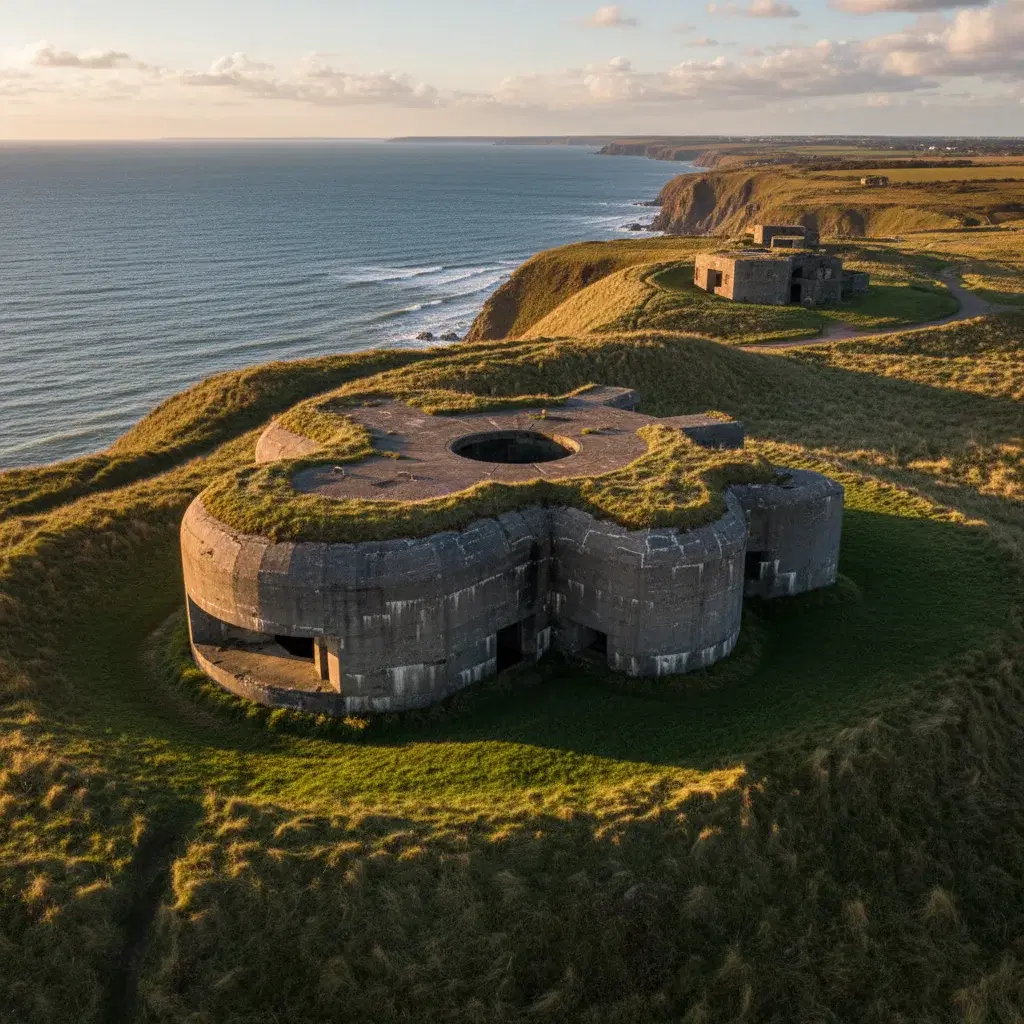
Tucked away on Blyth Links, between the dunes and the golf course, sits one of the most remarkable military heritage sites on the entire North East coast. The Blyth Battery is the most intact and accessible coastal defence battery in the region -- and arguably anywhere on the North East and Yorkshire coastline. It's free to visit, run entirely by volunteers, and absolutely worth your time.
A Battery Built for War
The story begins in 1916, when the Admiralty ordered the construction of a coastal artillery battery at Blyth to defend the harbour and its vital shipping lanes. The port was a major coal exporting hub, and German naval forces -- including submarines and surface raiders -- posed a real threat to the supply chain that kept the country running.
Two six-inch naval guns were installed on the headland, capable of engaging enemy vessels several miles out to sea. The battery was manned by the Royal Garrison Artillery, and its strategic position gave commanding views across the approaches to the River Blyth and the wider coastline.
Best for: Built in 1916 to protect Blyth's vital coal shipping lanes from German naval threats during the First World War.
The Rotating Observation Post
The crown jewel of the site is the WW1 Battery Observation Post, a concrete structure with a rotating steel turret roof. From here, officers could track enemy ships and calculate firing solutions for the guns below. The turret allowed a full 360-degree sweep of the horizon without exposing the observer to enemy fire.
What makes this truly special is that it is believed to be the only remaining WW1 battery observation post with a rotating turret roof anywhere in the world. Similar structures existed at other coastal batteries around Britain, but none have survived in this condition. It's an extraordinary piece of military engineering, and standing inside it -- turning the turret yourself -- is a genuinely memorable experience.
Best for: The WW1 Battery Observation Post with its rotating turret roof is believed to be the only one of its kind still in existence anywhere in the world.
Upgraded for the Second World War
When war returned in 1939, the battery was reactivated, upgraded, and re-fitted with more modern armaments. New buildings were added, including a reinforced WW2 observation post, additional magazines for ammunition storage, and improved accommodation for the garrison.
The battery remained active throughout the Second World War, guarding the port as it handled military supplies, coastal convoys, and the continued movement of coal. Blyth's harbour was also a base for minesweepers and other small naval vessels, making the battery's role doubly important.
After the war, the site was decommissioned and gradually fell into disrepair, the buildings slowly consumed by sand and scrub. For decades, most people walking on the Links had no idea what lay beneath the dunes.
What You Can See Today
Thanks to years of painstaking restoration work, visitors can now explore a remarkable collection of buildings and structures:
- WW1 Officers' Dugout -- the underground quarters where officers lived and worked during the First World War, restored with period details
- The 1940 Room -- a recreation of wartime conditions during the Second World War, with original artefacts and displays
- The Magazine -- where shells and propellant charges were stored, giving a real sense of the scale of the operation
- WW2 Observation Post -- the later, more heavily fortified observation position built for the Second World War
- WW1 Battery Observation Post -- the star attraction with its unique rotating turret roof
The site also includes interpretation panels throughout, explaining the battery's role in both wars and the lives of the men who served there.
Guided Tours
The best way to experience the battery is on a guided tour, led by one of the site's knowledgeable volunteers. Tours last approximately 45 minutes and take you through all of the buildings, with stories and explanations that bring the history to life.
The volunteers are passionate about the site, and many have spent years researching its history. They're happy to answer questions and can tailor the tour to your interests -- whether you're a military history enthusiast or visiting with children who want to turn the turret.
Best for: Guided tours last around 45 minutes and cover all buildings. Led by knowledgeable volunteers who bring the history to life.
Award-Winning Volunteers
The Blyth Battery is managed and maintained entirely by a team of around 30 volunteers. They do everything -- from leading tours and staffing the tea shop to the ongoing restoration and conservation work that has brought the site back from near-oblivion.
Their dedication was recognised in 2025 when the Blyth Battery volunteers received The King's Award for Voluntary Service, the highest award given to volunteer groups in the United Kingdom. It's the equivalent of an MBE for voluntary organisations, and thoroughly deserved.
There's also a small tea shop on site where you can get a brew and a slice of cake -- all proceeds go towards the continued upkeep of the battery.
Visiting Information
The Blyth Battery is open from April to September, on Saturdays and Sundays from 11am to 4pm. Entry is completely free, though donations are very welcome and go directly towards conservation and restoration.
The site is located on Blyth Links, easily reached on foot from the town centre or by car. There is parking available nearby on the Links.
Best for: Open April to September, Saturdays and Sundays, 11am to 4pm. Free entry. Located on Blyth Links.
The terrain includes some uneven ground and steps, so sturdy footwear is advisable. The underground sections can be cool even in summer, so bringing a light layer is sensible.
For the latest opening information and event updates, check the Blyth Battery website.
Worth knowing: The Blyth Battery is one of those places that surprises people. It doesn't look like much from the outside -- a few concrete structures in the dunes. But once you step inside and hear the stories, you realise just how significant this site is. Whether you're a history enthusiast or simply looking for something different to do on a Saturday afternoon, it's well worth the visit.
More on Blyth: read our guides to Blyth Beach and things to do in Blyth, browse the local directory, or check what's on this week.
Know something we've missed? Get in touch and we'll add it.
Never miss what’s on
Join the weekly Blyth.live digest — the best events, news and local tips, straight to your inbox. Free, one email a week.
What's On
Reclaim, Remake, Reveal
12:30 PM - 2:30 PM · Market Pavilion, Bridge Street, Blyth, NE24 1AP
Your Voice, Blyth's Future: Briardale House Drop-In
10:00am-11:00am · Briardale House, Blyth
The Rock of Ages Experience
7:30 PM · The Phoenix Theatre, 37a Beaconsfield Street, Blyth, Northumberland, NE24 2DS