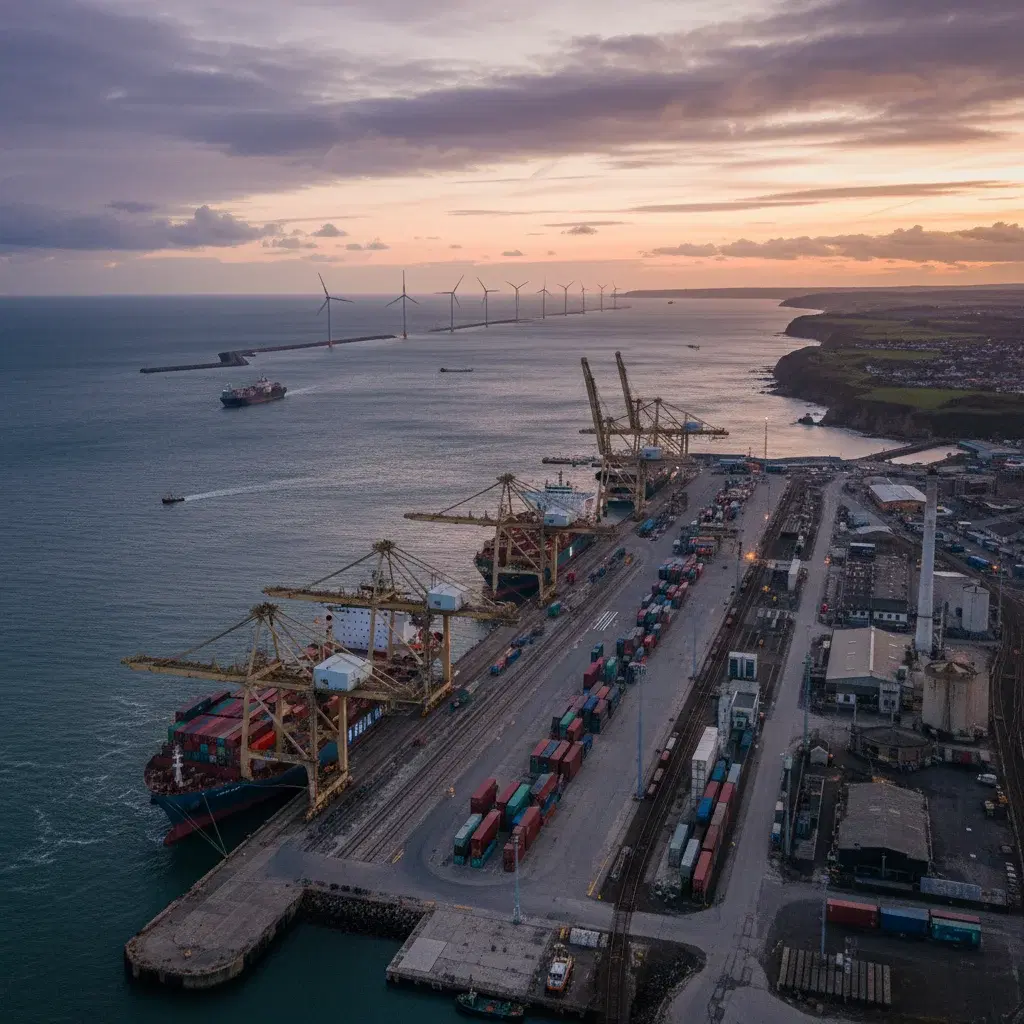
History of Blyth Port: From Coal to Clean Energy
From medieval salt monks to three million tons of coal a year to the UK's first offshore wind farm, the remarkable transformation of Blyth's port.
The story of Blyth is inseparable from the story of its port. For nearly 900 years, the river mouth and its quays have shaped the town's fortunes -- from medieval salt exports, through the thundering coal trade that once made Blyth one of the busiest ports in England, to its remarkable reinvention as a hub for offshore clean energy. It's a history of ambition, hard graft, boom, bust, and rebirth.
Medieval Beginnings
The first recorded reference to the port dates to 1138, when monks from Tynemouth Priory were documented exporting salt from the estuary. Salt production was a significant industry along the Northumberland coast, and the sheltered river mouth at Blyth provided a natural harbour for small trading vessels.
For centuries, the port remained modest -- a place of fishing boats and small-scale coastal trade, serving the agricultural hinterland and the priory's commercial interests. But the landscape beneath the surface would change everything.
Best for: First recorded in 1138 -- monks from Tynemouth Priory exporting salt from the River Blyth estuary.
The Rise of Coal
By the seventeenth century, the coal seams of south-east Northumberland were being worked on an increasingly industrial scale, and Blyth's harbour was perfectly positioned to ship the output southward. In 1682, a major commercial quay was established, transforming the port from a backwater into a serious trading hub.
The infrastructure grew rapidly. By 1730, dedicated coaling quays lined the river, a pilots' watch house was built to guide vessels safely into the harbour, and a lighthouse was erected to mark the entrance. The port was becoming a professional operation, handling ever-larger volumes of coal bound for London and the south-east.
In 1788, the first staith was constructed -- an elevated loading point that allowed coal wagons to tip their loads directly into the holds of waiting ships. It was a significant engineering advance, speeding up the loading process enormously and allowing the port to handle greater tonnage.
The Railway Changes Everything
The arrival of the railway in 1849 supercharged the coal trade. The Tyne and Blyth Junction Railway connected the collieries of the Northumberland coalfield directly to the port, and the first rail-linked staith was built to handle the vastly increased flow of coal.
Before the railway, coal had been transported to the quayside by horse-drawn waggonways -- slow, limited in capacity, and weather-dependent. Rail changed the economics completely. Trains could haul far greater loads, run in all weather, and operate around the clock. The port's capacity expanded dramatically.
Best for: The 1849 railway connection to the coalfields transformed Blyth from a busy port into one of the largest coal shipping operations in the country.
Three Million Tons a Year
By 1900, the scale of operations at Blyth was staggering. The port was shipping approximately three million tons of coal annually, placing it among the most productive coal ports in England. The coal staithes -- massive timber ramp structures that towered over the river -- became the defining feature of the waterfront.
These staithes were extraordinary pieces of industrial engineering. Enormous wooden frameworks, some stretching hundreds of feet along the river, supported elevated railway tracks along which coal wagons were pushed to the loading chutes. The coal would cascade down into the ships below in a thunderous black torrent. At peak times, the staithes operated continuously, with ships queuing in the river waiting their turn.
The town grew around the trade. Thousands of families depended on the port and the mines that fed it. Blyth's population swelled, terraced streets were built to house the workers, and the town's pubs, shops, and institutions all existed in the orbit of King Coal.
The harbour was dredged and widened to accommodate larger vessels. New staithes were built to meet demand. By the early twentieth century, Blyth was a port of genuine national significance -- a place where the raw energy of the Northumberland coalfield met the sea.
Best for: By 1900, Blyth was shipping three million tons of coal annually. The massive timber staithes became the defining feature of the waterfront.
The Long Decline
The twentieth century brought a slow unwinding. Two world wars disrupted trade, though the port remained vital for military supplies and coastal convoys. But the deeper currents were running against coal. Oil replaced it for shipping fuel. The railways switched to diesel and then electric. Power stations began closing or converting to gas. The great Northumberland collieries shut one by one.
By the latter decades of the century, the coal trade that had built Blyth was effectively finished. The staithes fell silent. Some were demolished, others left to weather and decay. The port that had once hummed with industrial purpose faced an uncertain future.
It was a painful transition for the town. Employment fell, businesses closed, and the waterfront that had been the engine of prosperity stood largely idle.
A New Chapter: The UK's First Offshore Wind Farm
The reinvention began in 2000 with a development that would put Blyth back on the map in an entirely new way. The Blyth Offshore Wind Farm was commissioned off the coast -- the United Kingdom's first offshore wind farm and a genuine milestone in the country's energy history.
The two turbines, each rated at 2MW, were the largest in the world at the time of installation. They stood in the North Sea about a kilometre offshore, visible from the quayside and the beach. It was a bold experiment, and it worked.
Best for: In 2000, Blyth became home to the UK's first offshore wind farm -- a pioneering moment in British clean energy history.
From Offshore Pioneer to Energy Hub
That pioneering installation proved to be the start of something much bigger. Throughout the 2010s, Blyth positioned itself as a hub for the offshore energy industry. The port's deep water, its experienced workforce, and its location on the North Sea coast made it a natural fit.
The quays began handling wind turbine components -- towers, nacelles, and blades of extraordinary size. Specialist vessels used the port as a base for offshore construction and maintenance work. The skills that had once served the coal industry were retooled for a new era.
In 2018, the port gained a fully licensed decommissioning facility, allowing it to handle the dismantling and recycling of offshore oil and gas infrastructure. It was another string to the bow, bringing skilled jobs and investment.
Then in 2021 came perhaps the most symbolic development of all. The Bates Clean Energy Terminal was established on the site of the old Bates Colliery, the last deep coal mine in Northumberland. The terminal, operated by the Port of Blyth, is dedicated to supporting the offshore wind industry -- clean energy on the very ground where coal was once brought to the surface. The naming was deliberate, and the symmetry is powerful.
Blyth Port Today
Today, the Port of Blyth is one of the UK's leading offshore energy support bases. It handles wind turbine components, provides berthing and logistics for offshore construction vessels, and serves as a base for maintenance operations across the North Sea wind farms.
The 76-metre wind turbine that stands on the quayside is visible from much of the town -- a physical marker of how far the port has come from its coal-shipping days. It's a testing and demonstration turbine, but it also serves as a statement of intent.
The port continues to evolve. Investment in infrastructure, new berths, and specialist facilities keeps it competitive in a fast-growing industry. The workforce is growing again, and the skills pipeline is being rebuilt through partnerships with local colleges and training providers.
Best for: From medieval salt to three million tons of coal to the UK's first offshore wind farm -- Blyth Port's story mirrors the story of British energy itself.
Worth reflecting on: Stand on the quayside today and you can see the wind turbine, the energy terminal, and the remains of the old staithes. Nearly 900 years of history in a single view. Blyth's port has reinvented itself before, and it's doing it again. The coal has gone, but the energy -- in every sense -- remains.
More on Blyth: read our guides to the Blyth Battery and things to do in Blyth, browse the local directory, or check what's on this week.
Know something we've missed? Get in touch and we'll add it.
Never miss what’s on
Join the weekly Blyth.live digest — the best events, news and local tips, straight to your inbox. Free, one email a week.
What's On
Reclaim, Remake, Reveal
12:30 PM - 2:30 PM · Market Pavilion, Bridge Street, Blyth, NE24 1AP
Your Voice, Blyth's Future: Briardale House Drop-In
10:00am-11:00am · Briardale House, Blyth
The Rock of Ages Experience
7:30 PM · The Phoenix Theatre, 37a Beaconsfield Street, Blyth, Northumberland, NE24 2DS