Blyth Submarine Base: The Secret War Beneath the Harbour
How Blyth became home to the Sixth Submarine Flotilla, the worst losses of any British flotilla, and a training ground for most of the submariners who fought in WW2.
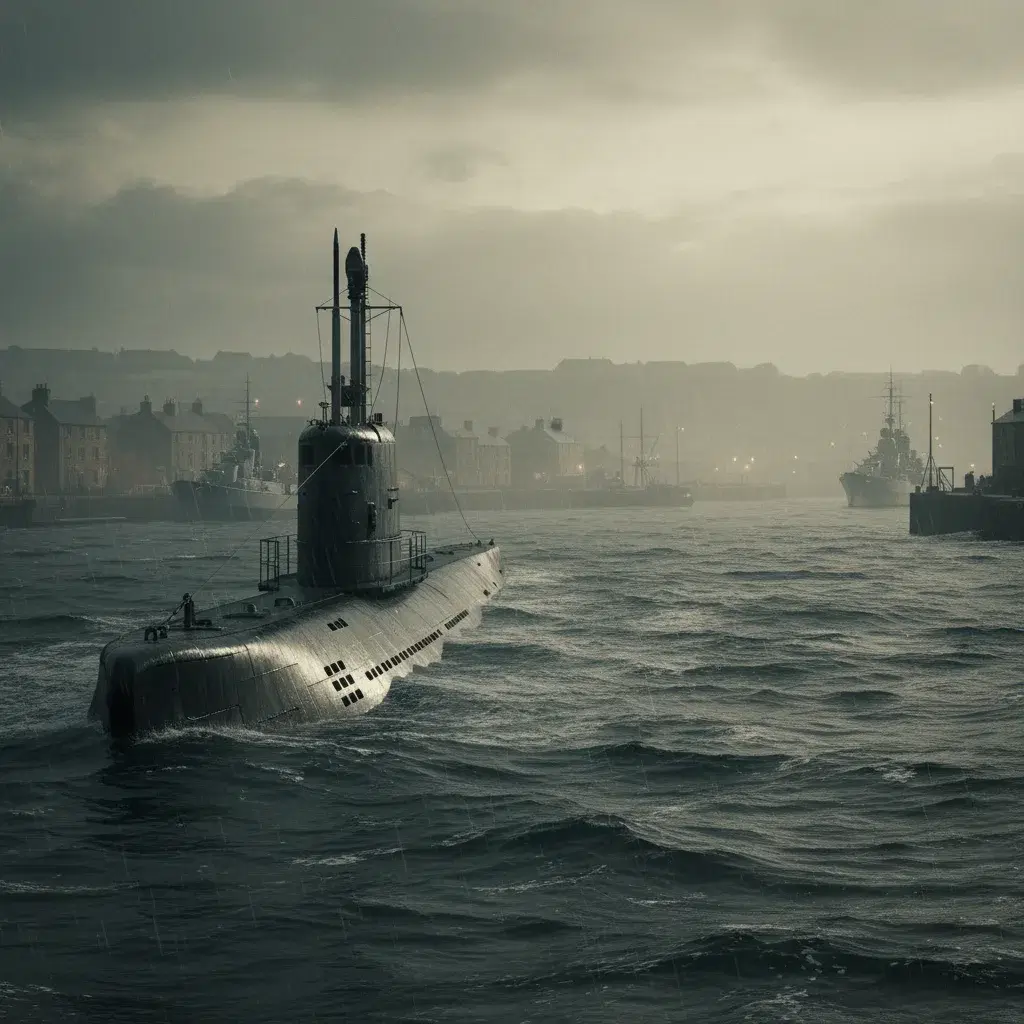
Walk along Blyth harbour today and you'll see fishing boats, pleasure craft, and the occasional cargo vessel. The quayside is quiet. There is nothing to tell you that this modest stretch of waterfront was once one of the most secret naval installations in Britain -- a submarine base so tightly guarded that even the people of Blyth knew almost nothing of what went on behind the wire.
This is the story of HMS Elfin and the men who sailed from Blyth into some of the most dangerous waters of the Second World War.
Why Blyth?
The Admiralty chose Blyth for practical reasons. The harbour was deep enough for submarines, sheltered from the worst of the North Sea weather, and well positioned for operations towards Scandinavia. Crucially, it was a working port -- a few extra vessels coming and going wouldn't raise eyebrows.
The base was designated HMS Elfin, home to the Sixth Submarine Flotilla. In August 1939, with war looming, the flotilla took up its war station. By the time the first shots were fired, the submarines were already in position.
Best for: HMS Elfin: the Sixth Submarine Flotilla's war station at Blyth harbour, operational from August 1939. The submarines were in position before war was even declared.
Behind the Wire
The security was extraordinary, even by wartime standards. Access roads were blocked. Gates stood behind sandbag emplacements. Machine gun posts, wound with barbed wire, guarded every approach. Canvas screens prevented anyone -- even from upper-storey windows in nearby streets -- from seeing the quayside or the submarines moored alongside.
Cameras were banned absolutely. No civilian photography was permitted, and even official media required specific authorisation. The people of Blyth understood that something was happening behind those screens, but the details were kept from them with a thoroughness that seems unimaginable today. Every patrol, every departure, every return was a secret -- from the enemy, from the town, and often from the families of the men themselves.
Best for: Canvas screens blocked views of the quayside. Cameras were banned. Machine gun posts guarded every approach. Even Blyth's own residents were kept in the dark.
The Clockwork Mice
The submarines of the Sixth Flotilla were small coastal boats -- compact, manoeuvrable vessels designed for operations in shallow, confined waters. Their crews nicknamed them the "Clockwork Mice," a term of rough affection for boats that were cramped, noisy, and uncomfortable, but which could slip into waters too shallow and too dangerous for larger submarines.
These were not the grand fleet submarines of popular imagination. They were working boats crewed by small teams, often operating alone in hostile waters, laying mines, gathering intelligence, and attacking enemy shipping off the Norwegian coast and in the approaches to occupied Europe.
Life aboard was gruelling. The boats were perpetually damp, the air thick with diesel fumes, and the crews lived in spaces so confined that sleeping, eating, and working all happened within arm's reach of each other. A patrol could last weeks, with the crew sealed inside a steel tube beneath the surface, unable to communicate, unable to do anything except wait, watch, and hope.
Dead Men on Leave
The submariners had a grim piece of dark humour that stayed with them throughout the war. When they came ashore on leave between patrols, they called themselves the "Dead Men on Leave." It was a joke, but only barely. The survival rates for submarine crews, particularly in the early years of the war, were appalling.
By the end of 1940, the Sixth Submarine Flotilla had suffered the worst losses of any British submarine flotilla. Boats left Blyth harbour and simply did not come back. There was rarely definitive news -- a submarine that failed to return could have been depth-charged, mined, or simply vanished. Families received nothing more than a telegram: "missing, presumed dead."
These were young men, many barely out of their teens, sailing from a quiet Northumberland harbour into waters where the odds were brutally stacked against them. They knew the statistics. They went anyway.
Best for: The Sixth Flotilla suffered the worst losses of any British submarine flotilla by end of 1940. The crews called themselves the "Dead Men on Leave."
From Fighting Base to Training Ground
After the devastating losses of 1940, HMS Elfin's role shifted. The base became primarily a training establishment, preparing new submarine crews for service in all theatres of the war. Blyth's harbour and its proximity to suitable North Sea training waters made it ideal.
The significance is hard to overstate. By the war's end, most British submariners who fought in the conflict had either served at Blyth or trained there. The harbour where the Clockwork Mice had set out on their perilous early patrols became the place where an entire generation learned their trade. HMS Elfin remained operational until March 1945.
What Remains
Today, almost nothing visible remains of HMS Elfin. The sandbags are gone, the machine gun posts dismantled, the canvas screens taken down decades ago. The quayside where submarines once moored is used by fishing boats and small commercial vessels.
But the harbour itself is still there. The water where the Clockwork Mice slipped their moorings and headed into the North Sea is the same water that laps against the quay wall today. Stand on the harbourside and you are standing where the Dead Men on Leave stood, watching their boats being readied for another patrol, wondering whether this one would be the last.
It is one of the most fascinating and least-known stories in Northumberland's history -- a secret war fought from a quiet harbour, by men whose courage and sacrifice deserve to be remembered.
Best for: Little visible evidence remains, but the harbour where it all happened is still there -- one of Northumberland's most remarkable hidden histories.
Further Reading
For more on Blyth's military heritage, see our guide to Blyth Battery. The harbour and quayside also feature the Spirit of the Staithes sculpture, which commemorates the town's coal shipping past -- another chapter in Blyth's long relationship with its waterfront.
Never miss what’s on
Join the weekly Blyth.live digest — the best events, news and local tips, straight to your inbox. Free, one email a week.
What's On
Reclaim, Remake, Reveal
12:30 PM - 2:30 PM · Market Pavilion, Bridge Street, Blyth, NE24 1AP
Your Voice, Blyth's Future: Briardale House Drop-In
10:00am-11:00am · Briardale House, Blyth
The Rock of Ages Experience
7:30 PM · The Phoenix Theatre, 37a Beaconsfield Street, Blyth, Northumberland, NE24 2DS